Taste Test: Local, Sustainable Whole Milk From 6 Top California Dairies

KQED

By

Humans have been consuming cow’s milk since European dairy farmers developed a genetic adaptation that enabled them to digest lactase about 7,500 years ago. A high-protein, calorie-dense, versatile beverage, milk is a dietary staple for millions of Americans, and it’s full of calcium and Vitamin D, to boot. Whether your kids drink it by the gallon or you just splash a bit on your oatmeal every morning, here’s a handy guide to the best whole milk available in the Bay Area, with tasting notes for each.

While American milk consumption is down 37% since 1970, the USDA estimates that U.S. residents still consume an average of .8 cups per person each day. But despite recent medical research touting the nutritional benefits of full-fat dairy products, whole milk—the focus of this guide—is still out of favor, down to .24 cups per day, on average, for U.S. consumers.

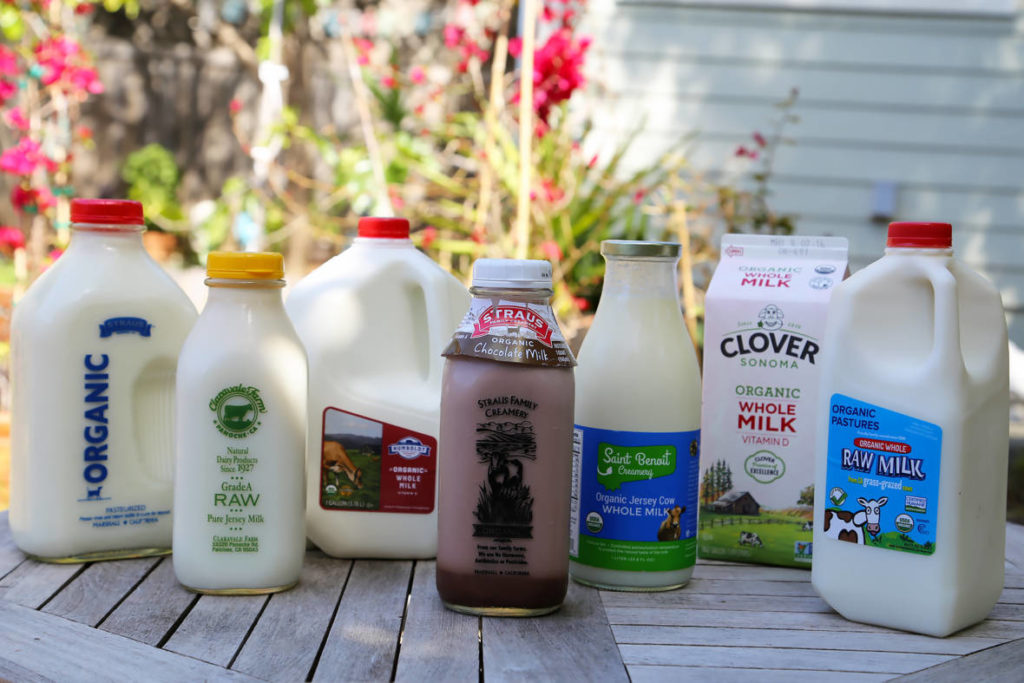
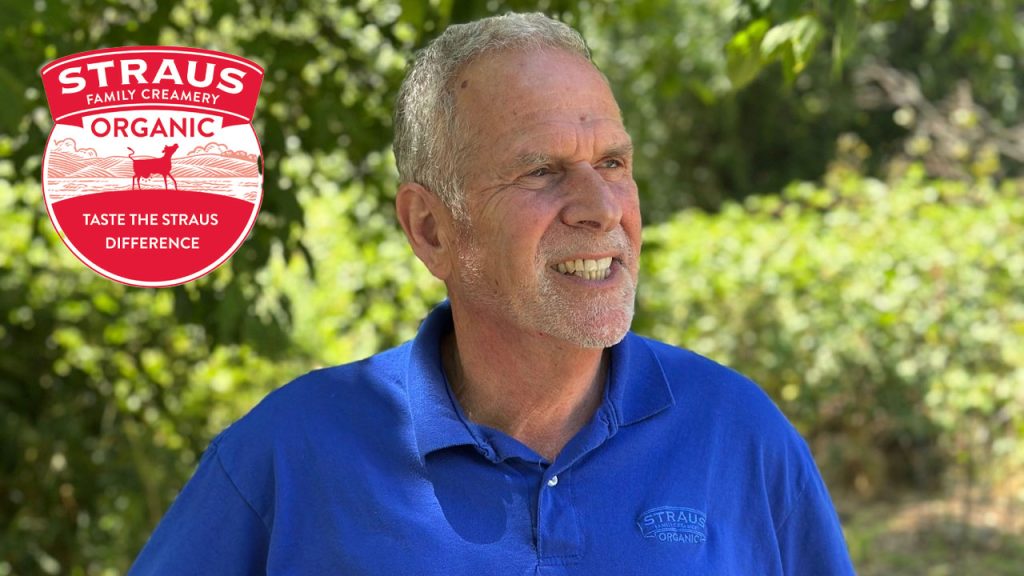
This may not be the case, however, in the Bay Area, where there’s a tremendous amount of competition among producers of the highest quality sustainable whole milk. We identified six brands that are widely available throughout the Bay Area that meet the criteria for this guide (both sustainable and full-fat) and also taste great, albeit in vastly different ways: Straus Family Creamery, Clover Sonoma, Saint Benoît Creamery, Humboldt Creamery, and two less widely available raw milks worth seeking out, from Claravale and Organic Pastures.
Read full article

Related Posts

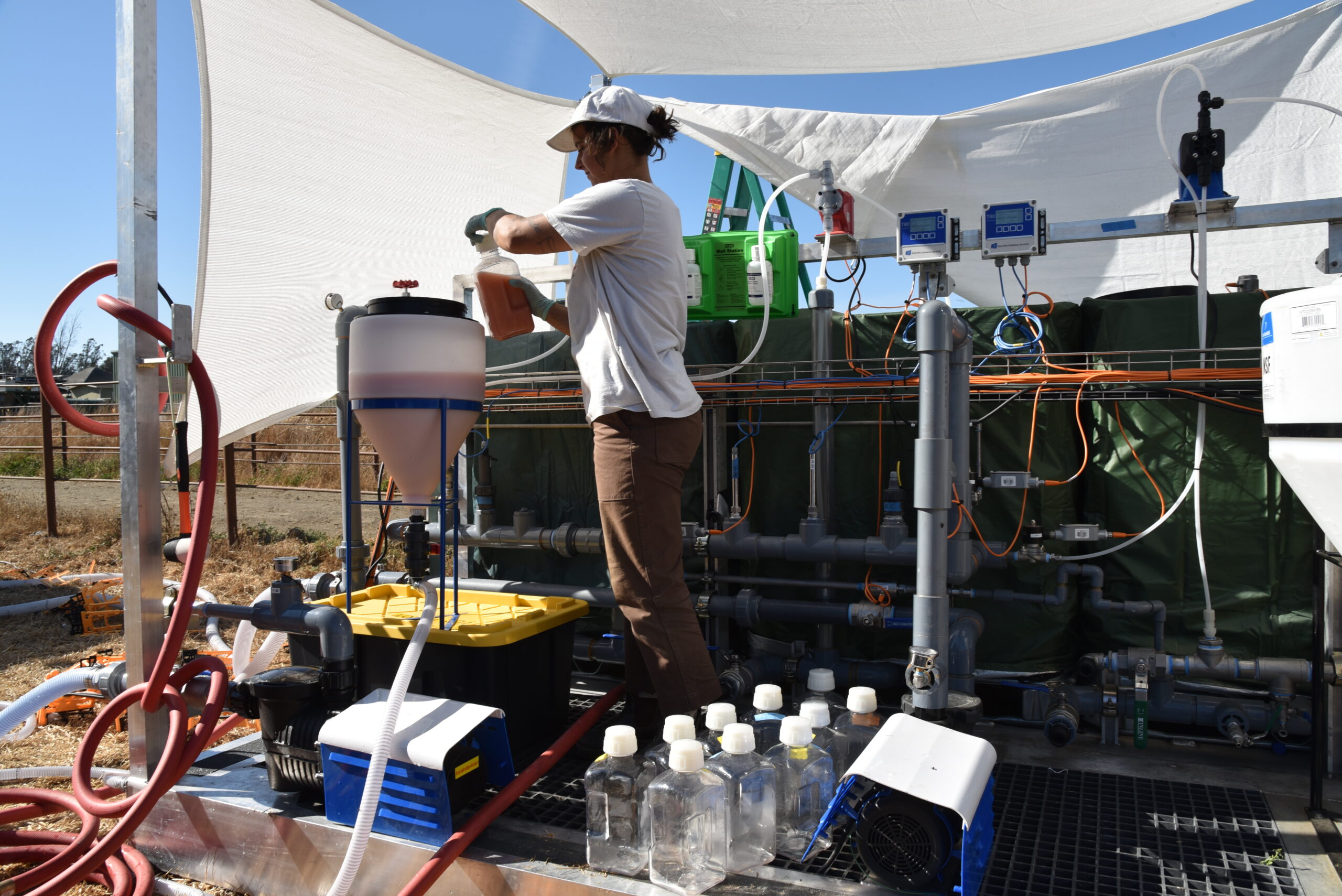
A person wearing a hat, gloves, and work clothes stands at an outdoor research station at Correia Family Dairy, pouring a reddish liquid into a large funnel-shaped container connected to hoses and pipes. Several plastic sample bottles sit on the ground nearby, and shade cloths overhead provide cover. The setup includes pumps, tubing, and monitoring devices, suggesting a water, soil, or nutrient treatment experiment.

These very hungry microbes devour a powerful pollutant

PETALUMA, Calif. — The cows had to be deterred from messing with the
experiment.

Researchers from a Bay Area technology company had come to the sprawling
dairy farm north of San Francisco to test an emerging solution to planetwarming emissions: microscopic pink organisms that eat methane, a potent
greenhouse gas.

Kenny Correia, 35, of Correia Family Dairy, watched the team from Windfall Bio
working near the lagoons used to store manure from the farm’s several hundred
cows. The researchers erected a futuristic system of vats, pipes, tubes and shiny
metal supports. Then, when everything was assembled, they poured pink liquid
into one of the vats. “They were looking like mad scientists out there,” Correia
recounted.

He acknowledged initially thinking it was a “crazy idea” to integrate an outdoor
laboratory into a working farm. There was the potential for the cows to “be all
over it — licking it, pulling out wires and scratching on it,” he said.
But livestock farms are a significant source of methane emissions, and Windfall
wanted to see how much the microbes could help.

Read More »