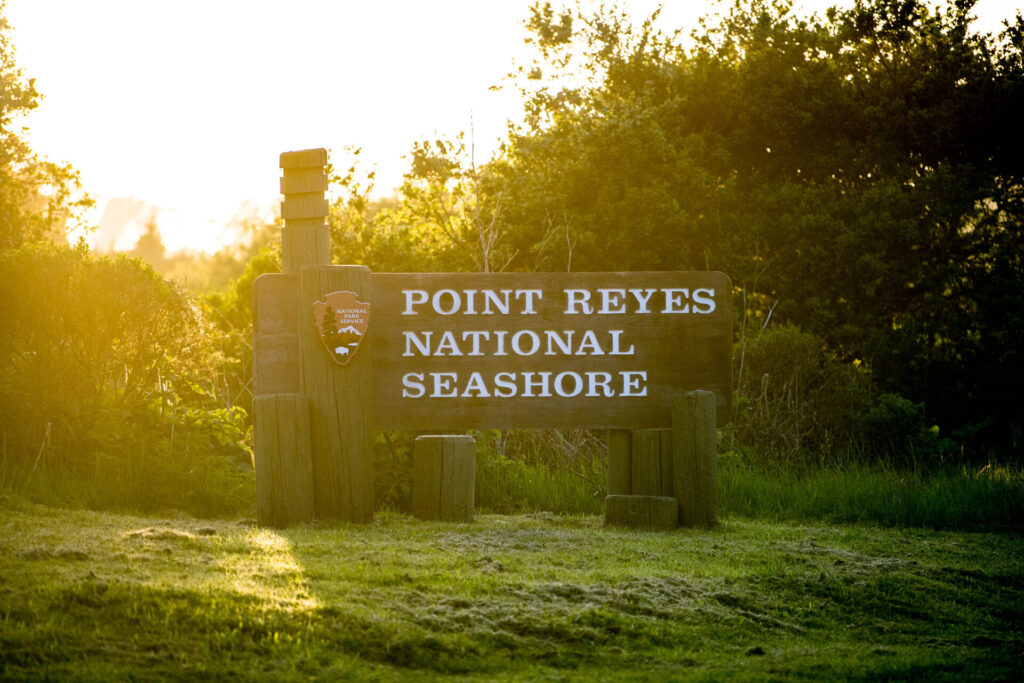
Point Reyes National Seashore Sign

Activists, Ranchers Clash Over Proposed Changes to Point Reyes National Seashore

CBS News Bay Area

By John Ramos

For several years during the drought, environmentalists criticized the National Park service for its management of a Tule Elk reserve at Tomales Point in western Marin County. But recently, a change was announced to the management plan that has the entire region up in arms.

On June 9th, the National Park Service sent out a press release that shocked everyone in the fight over the Tule Elk Reserve at Tomales Point, announcing a proposed change to the general plan: “The proposed action would include removal of the tule elk fence and temporary water systems installed during the most recent drought.” It seems no one on either side saw that coming.

“Sudden announcement, blindsided all of us–delightfully so–that the Park Service is proposing finally removing this fence. Out of the blue…had no idea that was coming,” said Jack Gescheidt, an elk activist and consultant for In Defense of Animals.

During the drought, roughly a third of the elk in the reserve died from thirst or deprivation. Activists, including Gescheidt, demanded the fence be removed to allow the elk to roam freely into the pasture lands of the adjacent cattle ranches.

“Hundreds of elk have died inside this so-called ‘reserve,'” he said, “It’s a reserve that is actually lethal to elk contained within it when it’s hot and dry, which it increasingly is because of climate crisis.”

Read full article and watch video

Related Posts

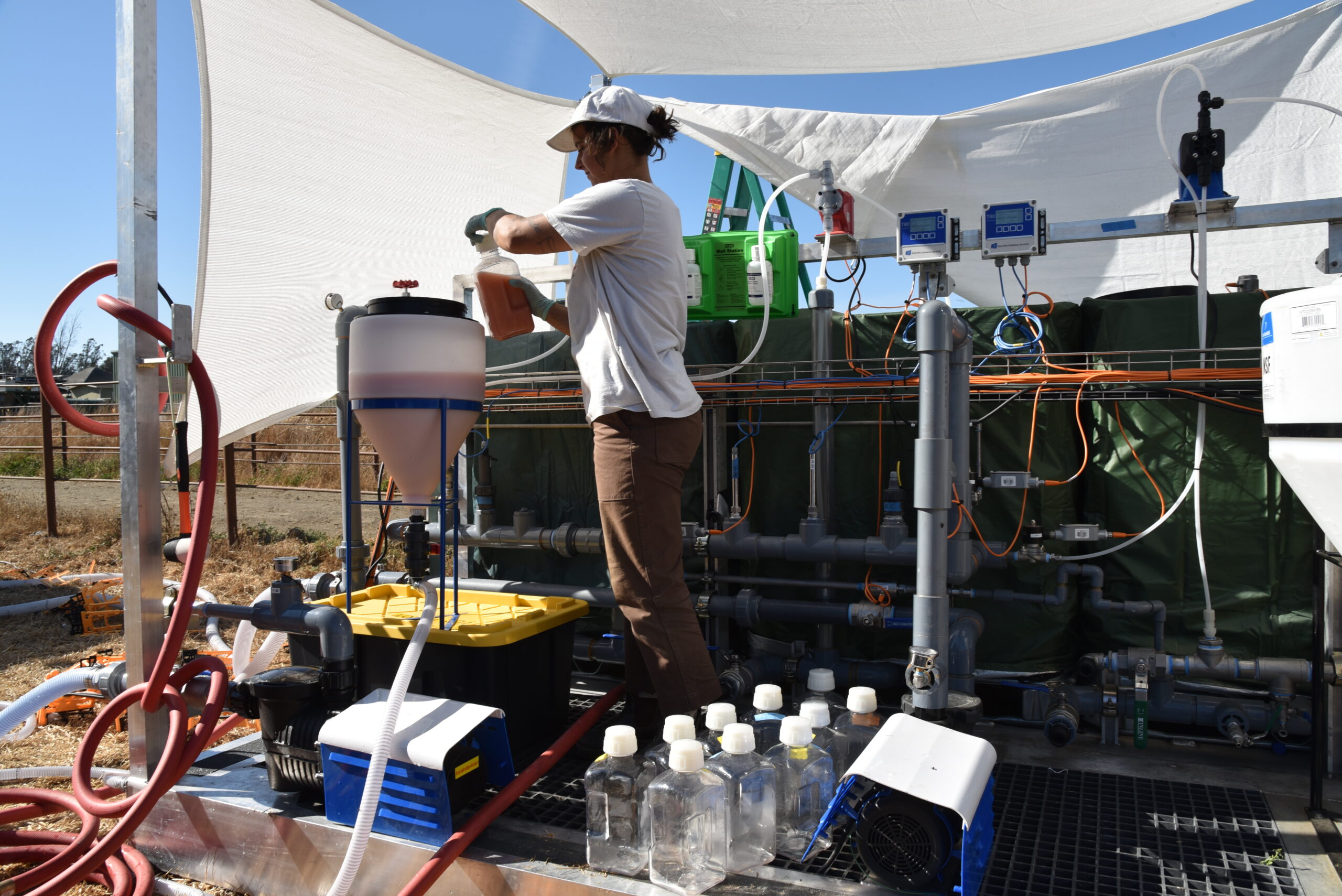
A person wearing a hat, gloves, and work clothes stands at an outdoor research station at Correia Family Dairy, pouring a reddish liquid into a large funnel-shaped container connected to hoses and pipes. Several plastic sample bottles sit on the ground nearby, and shade cloths overhead provide cover. The setup includes pumps, tubing, and monitoring devices, suggesting a water, soil, or nutrient treatment experiment.

These very hungry microbes devour a powerful pollutant

PETALUMA, Calif. — The cows had to be deterred from messing with the
experiment.

Researchers from a Bay Area technology company had come to the sprawling
dairy farm north of San Francisco to test an emerging solution to planetwarming emissions: microscopic pink organisms that eat methane, a potent
greenhouse gas.

Kenny Correia, 35, of Correia Family Dairy, watched the team from Windfall Bio
working near the lagoons used to store manure from the farm’s several hundred
cows. The researchers erected a futuristic system of vats, pipes, tubes and shiny
metal supports. Then, when everything was assembled, they poured pink liquid
into one of the vats. “They were looking like mad scientists out there,” Correia
recounted.

He acknowledged initially thinking it was a “crazy idea” to integrate an outdoor
laboratory into a working farm. There was the potential for the cows to “be all
over it — licking it, pulling out wires and scratching on it,” he said.
But livestock farms are a significant source of methane emissions, and Windfall
wanted to see how much the microbes could help.

Read More »