Albert Straus pulls back the curtain on the creamery’s mission to sustain and support organic farms nationwide

Deli Market News

by  Robert Schaulis

As a Northern California native, I’ve enjoyed Straus Family Creamery products for years. The provider of premium organic dairy products is a fan-favorite, offering milk, cream, yogurt, butter, and ice cream to customers throughout the western and central United States.

East Coasters, though perhaps unfamiliar with the brand, have been reaping the rewards of Straus Family Creamery’s exceptional products too—through the company’s partnerships with Cowgirl Creamery and others in the Northern California sweet spot of artisan cheesemaking.

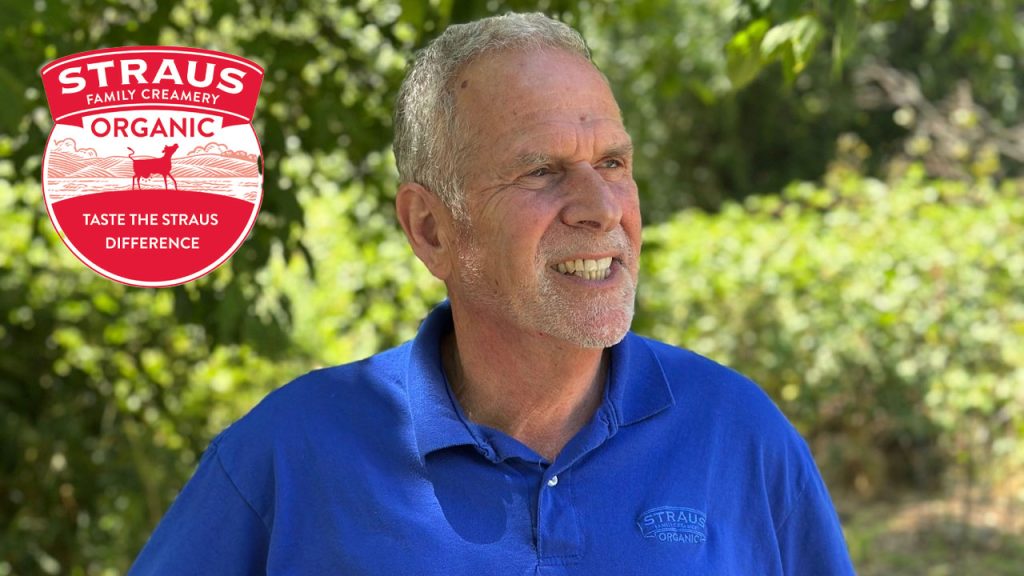
“The mission of Straus Family Creamery is to support and sustain organic dairy farms in Marin and Sonoma County by producing the highest quality, minimally processed organic products,” said Albert Straus, Organic Dairy Farmer and Founder and CEO. “What I’ve tried to do is create a model of a sustainable farming system that is good for the earth, the soil, the animals, and the people working on these farms.”
Read full article

Related Posts

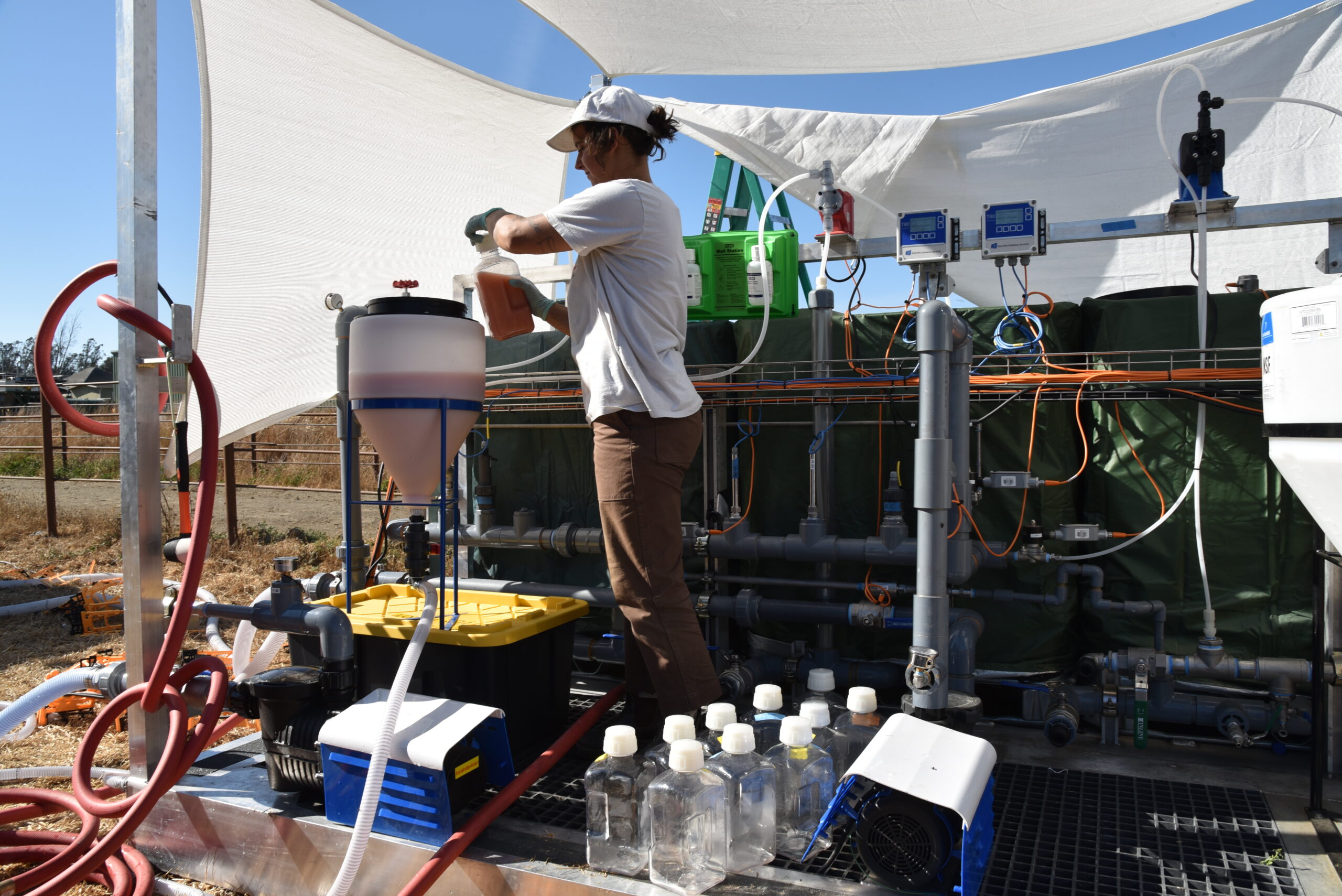
A person wearing a hat, gloves, and work clothes stands at an outdoor research station at Correia Family Dairy, pouring a reddish liquid into a large funnel-shaped container connected to hoses and pipes. Several plastic sample bottles sit on the ground nearby, and shade cloths overhead provide cover. The setup includes pumps, tubing, and monitoring devices, suggesting a water, soil, or nutrient treatment experiment.

These very hungry microbes devour a powerful pollutant

PETALUMA, Calif. — The cows had to be deterred from messing with the
experiment.

Researchers from a Bay Area technology company had come to the sprawling
dairy farm north of San Francisco to test an emerging solution to planetwarming emissions: microscopic pink organisms that eat methane, a potent
greenhouse gas.

Kenny Correia, 35, of Correia Family Dairy, watched the team from Windfall Bio
working near the lagoons used to store manure from the farm’s several hundred
cows. The researchers erected a futuristic system of vats, pipes, tubes and shiny
metal supports. Then, when everything was assembled, they poured pink liquid
into one of the vats. “They were looking like mad scientists out there,” Correia
recounted.

He acknowledged initially thinking it was a “crazy idea” to integrate an outdoor
laboratory into a working farm. There was the potential for the cows to “be all
over it — licking it, pulling out wires and scratching on it,” he said.
But livestock farms are a significant source of methane emissions, and Windfall
wanted to see how much the microbes could help.

Read More »