Organic Livestock Farmers, Hit by Rising Prices, Seek Help

Associated Press for Washington Post

By Lisa Rathke | AP

WHITINGHAM, Vt. — Organic dairy and other livestock farmers are seeking emergency federal aid as they grapple with skyrocketing organic feed costs, steep fuel and utility expenses as well as the consequences of drought in many parts of the country.

Two dozen U.S. senators and representatives wrote to U.S. Agriculture Department Secretary Tom Vilsack this week asking for emergency assistance for these farms. National and regional organic farming groups have also reached out to the department and the heads of the congressional committees.

Organic dairy farmer Abbie Corse, whose more than 150-year-old family farm is located in the southern Vermont town of Whittingham, said she doesn’t know what the future of the farm will look like.

“If a farm like ours is questioning how we’re going to keep going if something doesn’t change, I don’t know how we think there’s a future for anybody,” said Corse, 40, who farms with her mother and father.

Read full article

Related Posts

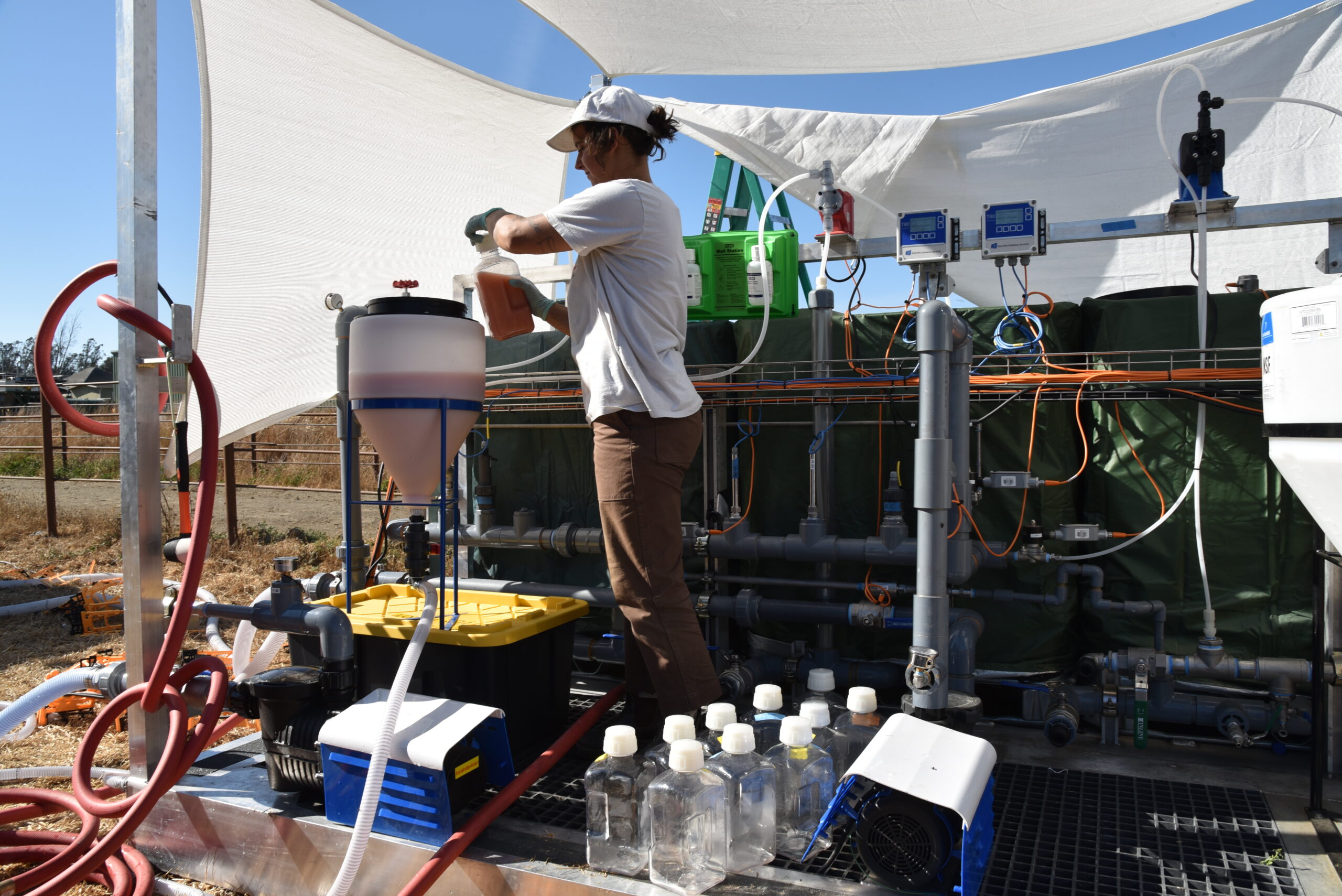
A person wearing a hat, gloves, and work clothes stands at an outdoor research station at Correia Family Dairy, pouring a reddish liquid into a large funnel-shaped container connected to hoses and pipes. Several plastic sample bottles sit on the ground nearby, and shade cloths overhead provide cover. The setup includes pumps, tubing, and monitoring devices, suggesting a water, soil, or nutrient treatment experiment.

These very hungry microbes devour a powerful pollutant

PETALUMA, Calif. — The cows had to be deterred from messing with the
experiment.

Researchers from a Bay Area technology company had come to the sprawling
dairy farm north of San Francisco to test an emerging solution to planetwarming emissions: microscopic pink organisms that eat methane, a potent
greenhouse gas.

Kenny Correia, 35, of Correia Family Dairy, watched the team from Windfall Bio
working near the lagoons used to store manure from the farm’s several hundred
cows. The researchers erected a futuristic system of vats, pipes, tubes and shiny
metal supports. Then, when everything was assembled, they poured pink liquid
into one of the vats. “They were looking like mad scientists out there,” Correia
recounted.

He acknowledged initially thinking it was a “crazy idea” to integrate an outdoor
laboratory into a working farm. There was the potential for the cows to “be all
over it — licking it, pulling out wires and scratching on it,” he said.
But livestock farms are a significant source of methane emissions, and Windfall
wanted to see how much the microbes could help.
Read More »