The one place in Los Angeles to buy the best yogurt in America

Los Angeles Times

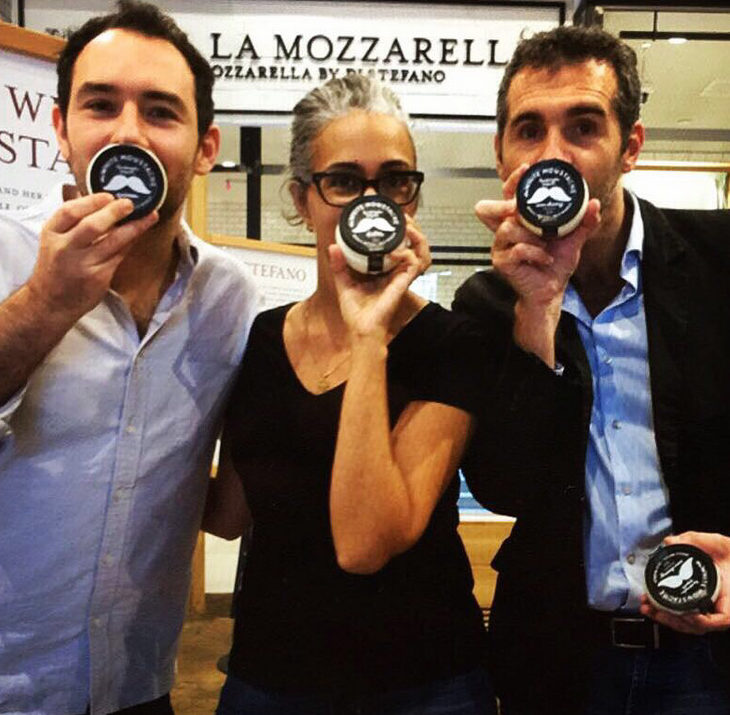
Photo courtesy @whitemoustache

It was dense and at the same time light, and sweet — not sugary sweet, pure-milk sweet. The pitted cherries underneath had been left whole, and their flavor still gripped a tart edge. The fruit’s juices mixed with the yogurt and created a slurry deliciousness. I had never tasted finer commercially made yogurt in America. Hello, new obsession.

When I knew I was moving to Los Angeles in the late fall, I was sad there would be no more White Moustache yogurt in my life. But I was wrong. Exactly one place sells it here: Eataly L.A. in Westfield Century City.

Homa Dashtaki started White Moustache in Southern California in 2011. Ironically, she had to move her business to Brooklyn before Angelenos could find her exquisite product. She first began making whole-milk yogurt in Orange County with her father, Goshtasb Dashtaki, whose fulsome facial hair inspired the company’s name. They used a family recipe; eating homemade yogurt was part of the diet in her Iranian family. Dashtaki set up shop at the Laguna Beach Farmers Market — and quickly began tangling with an inspector from the California Department of Food and Agriculture. By 2012, Brooklyn had proved a more hospitable business environment.
Read full article

Related Posts

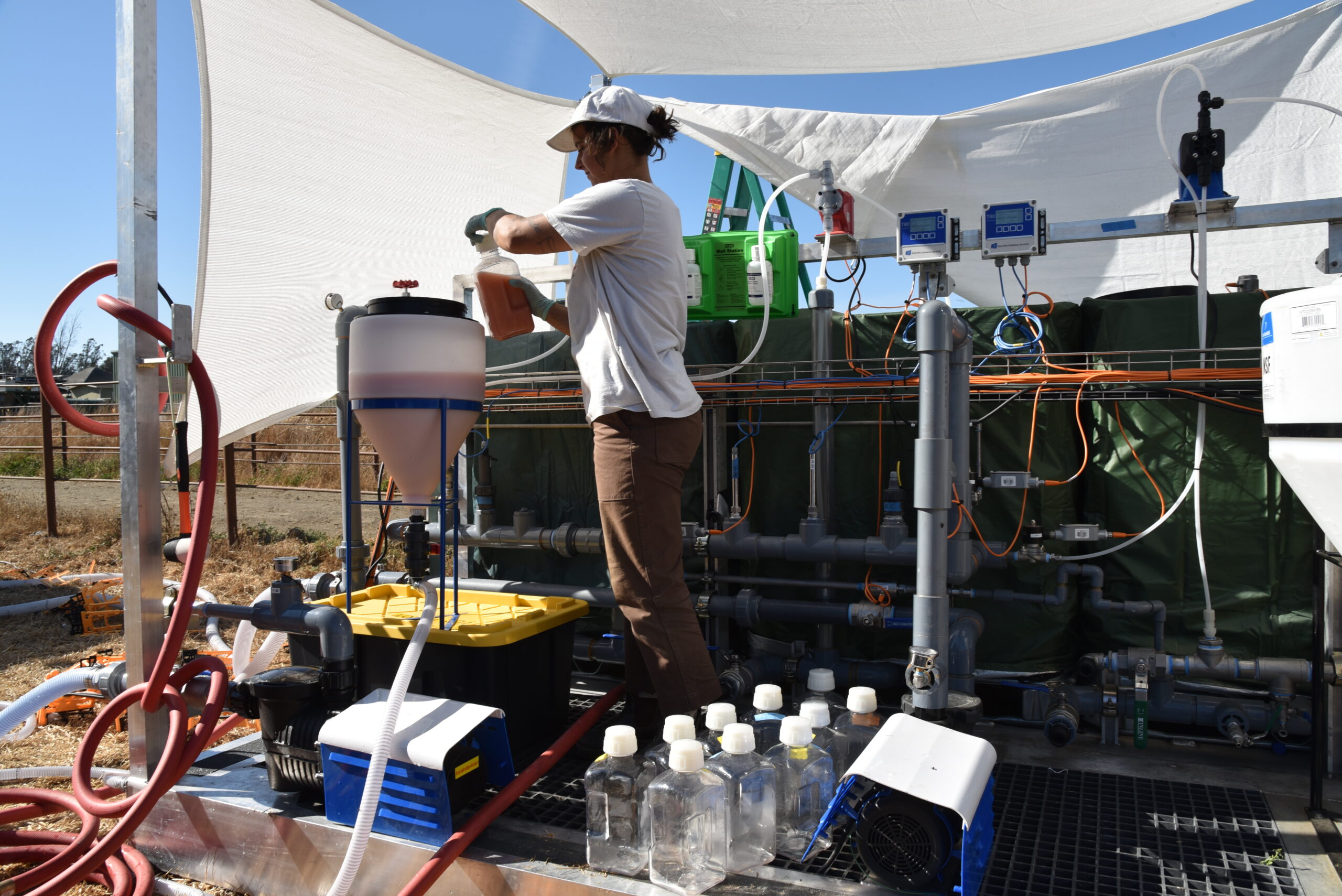
A person wearing a hat, gloves, and work clothes stands at an outdoor research station at Correia Family Dairy, pouring a reddish liquid into a large funnel-shaped container connected to hoses and pipes. Several plastic sample bottles sit on the ground nearby, and shade cloths overhead provide cover. The setup includes pumps, tubing, and monitoring devices, suggesting a water, soil, or nutrient treatment experiment.

These very hungry microbes devour a powerful pollutant

PETALUMA, Calif. — The cows had to be deterred from messing with the
experiment.

Researchers from a Bay Area technology company had come to the sprawling
dairy farm north of San Francisco to test an emerging solution to planetwarming emissions: microscopic pink organisms that eat methane, a potent
greenhouse gas.

Kenny Correia, 35, of Correia Family Dairy, watched the team from Windfall Bio
working near the lagoons used to store manure from the farm’s several hundred
cows. The researchers erected a futuristic system of vats, pipes, tubes and shiny
metal supports. Then, when everything was assembled, they poured pink liquid
into one of the vats. “They were looking like mad scientists out there,” Correia
recounted.

He acknowledged initially thinking it was a “crazy idea” to integrate an outdoor
laboratory into a working farm. There was the potential for the cows to “be all
over it — licking it, pulling out wires and scratching on it,” he said.
But livestock farms are a significant source of methane emissions, and Windfall
wanted to see how much the microbes could help.

Read More »