Tresch Family’s environmental stewardship recognized by Sonoma County Farm Bureau with Luther Burbank Conservation Award

Sonoma County Farm Bureau

By Tim Tesconi 

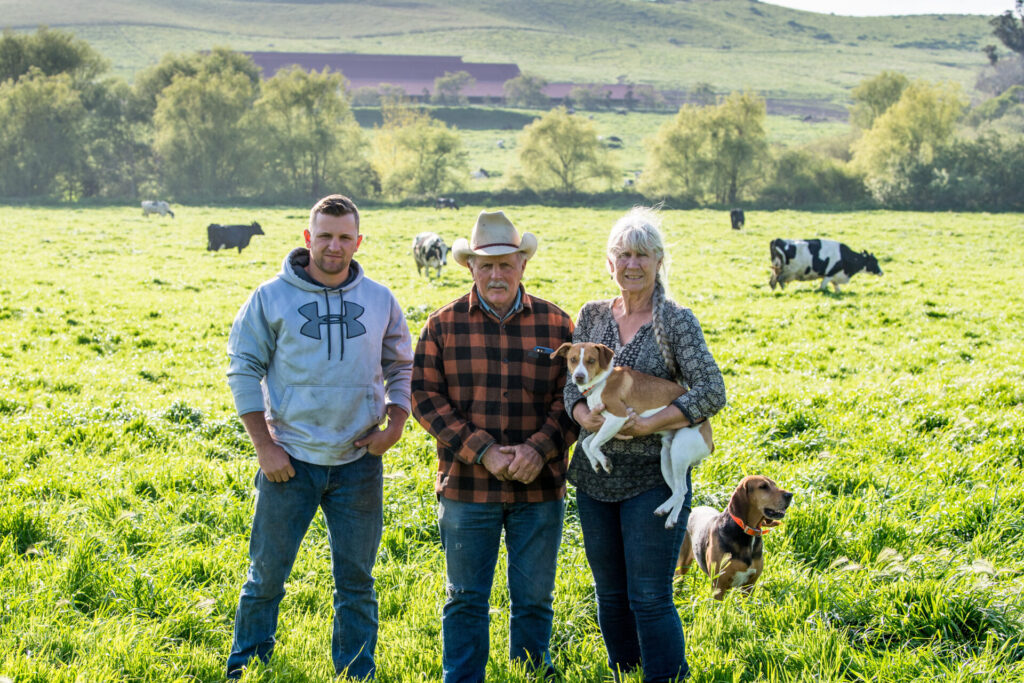
The Tresch family of Petaluma takes the pursuit of excellence very seriously in the care and management of their 2,600 acres of pristine grazing land, which they consider the bread-and-butter of their organic milk production.

It’s part of the family’s Old-World philosophy that if you take care of the land, it will take care of you and the cows that graze upon it. It’s a philosophy of environmental stewardship that has served the Tresch family well during the 120 years – and six generations – they have been on the Petaluma ranch. The original 320-acre home ranch has been expanded to 2,600 acres of contiguous pastureland using profits from milk to acquire neighboring ranches that became available.

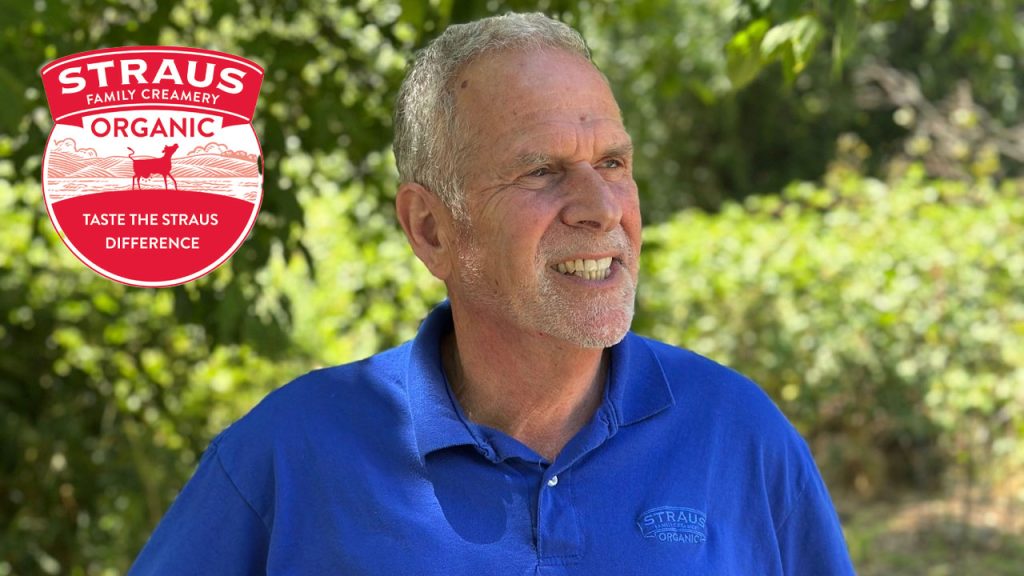
“This land is who we are,” said Joe Tresch, 77, who has lived his entire life on the ranch settled in 1905 by his great grandparents. He seldom ventures beyond the ranch driveway, content to live and work on land he loves.

“I get my news talking over a barbed wire fence,” said Tresch, a true remnant of the Old West.
Read the full article

Related Posts

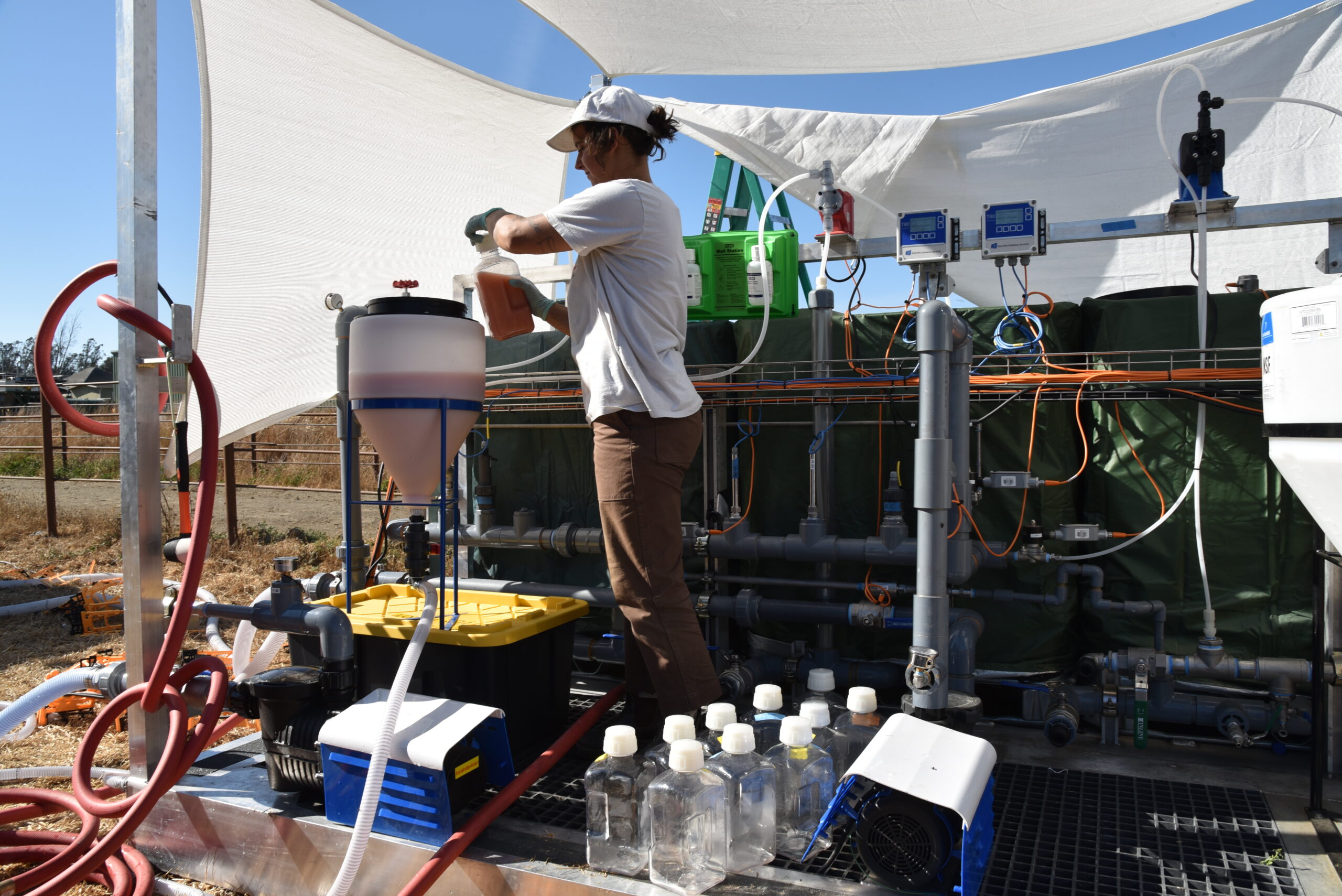
A person wearing a hat, gloves, and work clothes stands at an outdoor research station at Correia Family Dairy, pouring a reddish liquid into a large funnel-shaped container connected to hoses and pipes. Several plastic sample bottles sit on the ground nearby, and shade cloths overhead provide cover. The setup includes pumps, tubing, and monitoring devices, suggesting a water, soil, or nutrient treatment experiment.

These very hungry microbes devour a powerful pollutant

PETALUMA, Calif. — The cows had to be deterred from messing with the
experiment.

Researchers from a Bay Area technology company had come to the sprawling
dairy farm north of San Francisco to test an emerging solution to planetwarming emissions: microscopic pink organisms that eat methane, a potent
greenhouse gas.

Kenny Correia, 35, of Correia Family Dairy, watched the team from Windfall Bio
working near the lagoons used to store manure from the farm’s several hundred
cows. The researchers erected a futuristic system of vats, pipes, tubes and shiny
metal supports. Then, when everything was assembled, they poured pink liquid
into one of the vats. “They were looking like mad scientists out there,” Correia
recounted.

He acknowledged initially thinking it was a “crazy idea” to integrate an outdoor
laboratory into a working farm. There was the potential for the cows to “be all
over it — licking it, pulling out wires and scratching on it,” he said.
But livestock farms are a significant source of methane emissions, and Windfall
wanted to see how much the microbes could help.

Read More »