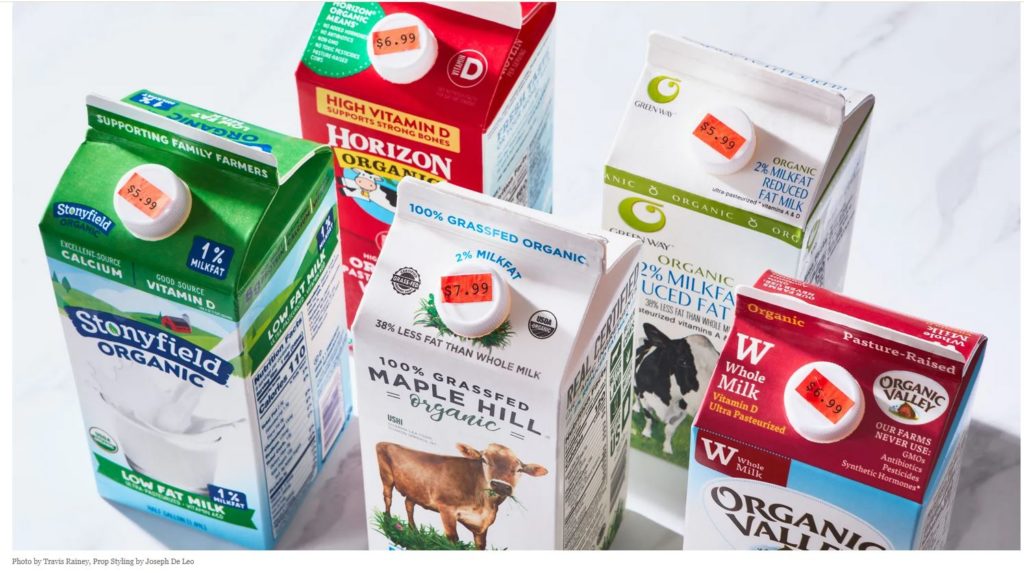
Epicurious - Photo by Travis Rainey, Prop Styling by Joseph De Leo

Why Does Organic Milk Cost So Much?

Epicurious

You’re strolling the aisles of your local market. You arrive at the cool, glowing refrigerator cases of the dairy section, poised to make a quick decision about what you’ll pour into your next glass of homemade boba or rich batch of pots de crème. The shelves all look the same. The neatly stacked cartons all look the same. But a closer inspection of the price tags underneath them makes the wheels of your shopping cart come to a stiff halt.

With today’s inflation affecting food prices around the globe, you might be second-guessing and overthinking every purchase you make. But when the difference between the price of a gallon of organic versus nonorganic milk grows to a staggeringly wide gulf—as in a more-than-twice-as-expensive gulf—you might start wondering what the heck’s going on. How is the cost of conventional milk so cheap by comparison? And what, exactly, are you getting for the extra cost of organic?
Read full article

Related Posts

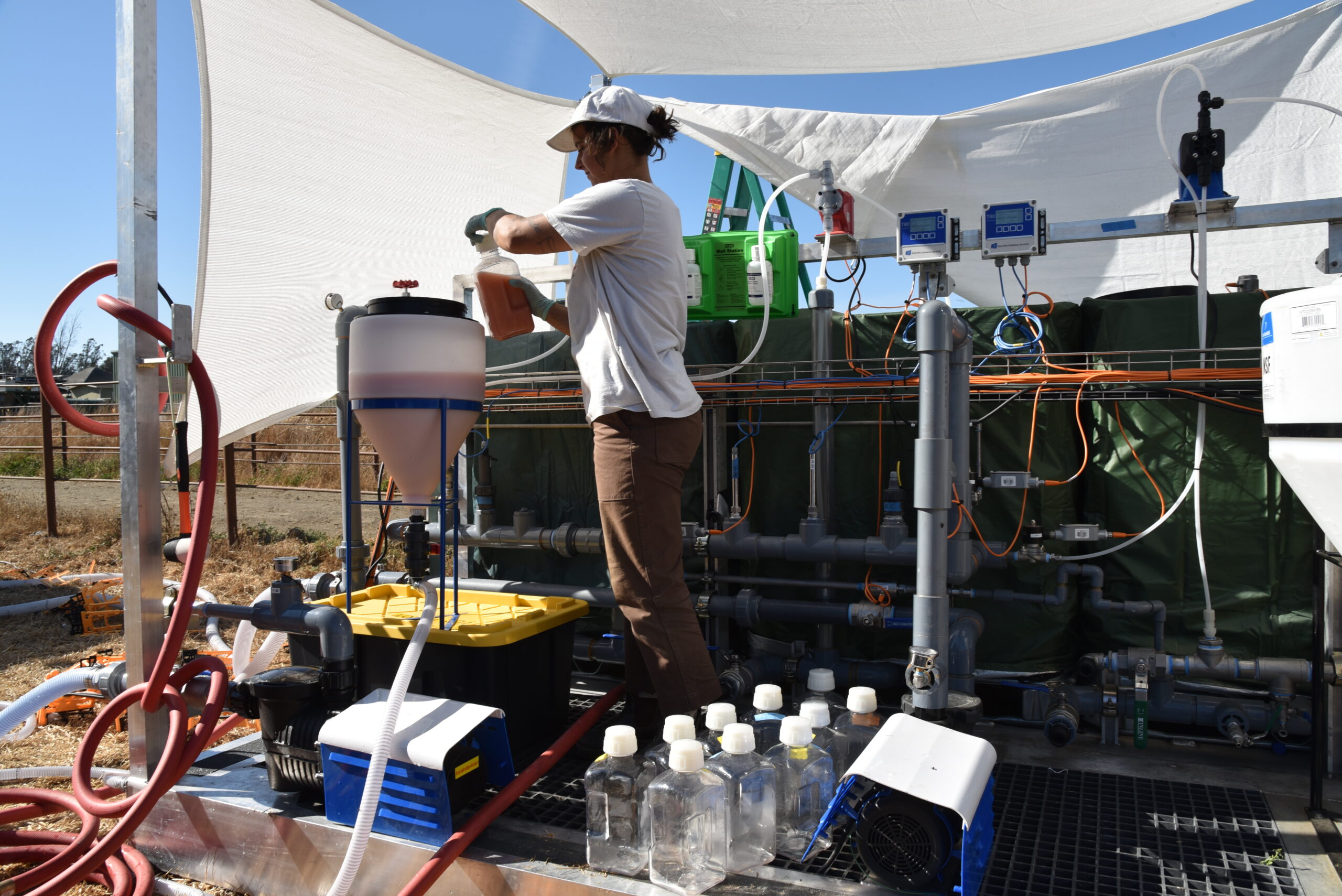
A person wearing a hat, gloves, and work clothes stands at an outdoor research station at Correia Family Dairy, pouring a reddish liquid into a large funnel-shaped container connected to hoses and pipes. Several plastic sample bottles sit on the ground nearby, and shade cloths overhead provide cover. The setup includes pumps, tubing, and monitoring devices, suggesting a water, soil, or nutrient treatment experiment.

These very hungry microbes devour a powerful pollutant

PETALUMA, Calif. — The cows had to be deterred from messing with the
experiment.

Researchers from a Bay Area technology company had come to the sprawling
dairy farm north of San Francisco to test an emerging solution to planetwarming emissions: microscopic pink organisms that eat methane, a potent
greenhouse gas.

Kenny Correia, 35, of Correia Family Dairy, watched the team from Windfall Bio
working near the lagoons used to store manure from the farm’s several hundred
cows. The researchers erected a futuristic system of vats, pipes, tubes and shiny
metal supports. Then, when everything was assembled, they poured pink liquid
into one of the vats. “They were looking like mad scientists out there,” Correia
recounted.

He acknowledged initially thinking it was a “crazy idea” to integrate an outdoor
laboratory into a working farm. There was the potential for the cows to “be all
over it — licking it, pulling out wires and scratching on it,” he said.
But livestock farms are a significant source of methane emissions, and Windfall
wanted to see how much the microbes could help.

Read More »