Marin Voice: Point Reyes A Model For Healthy, Local Sustainable Agriculture

Marin Independent Journal

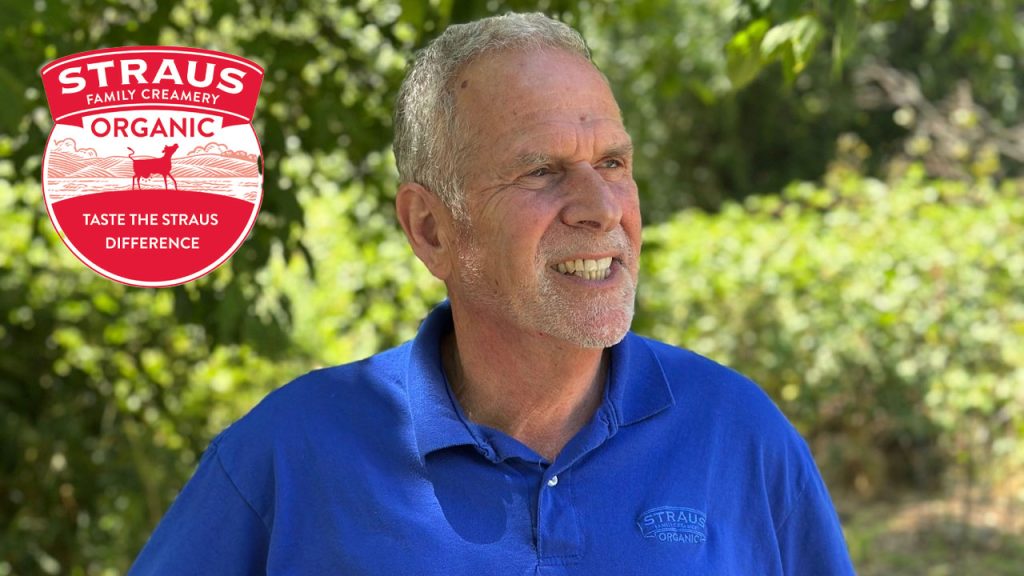
By Albert Straus and Sue Conley

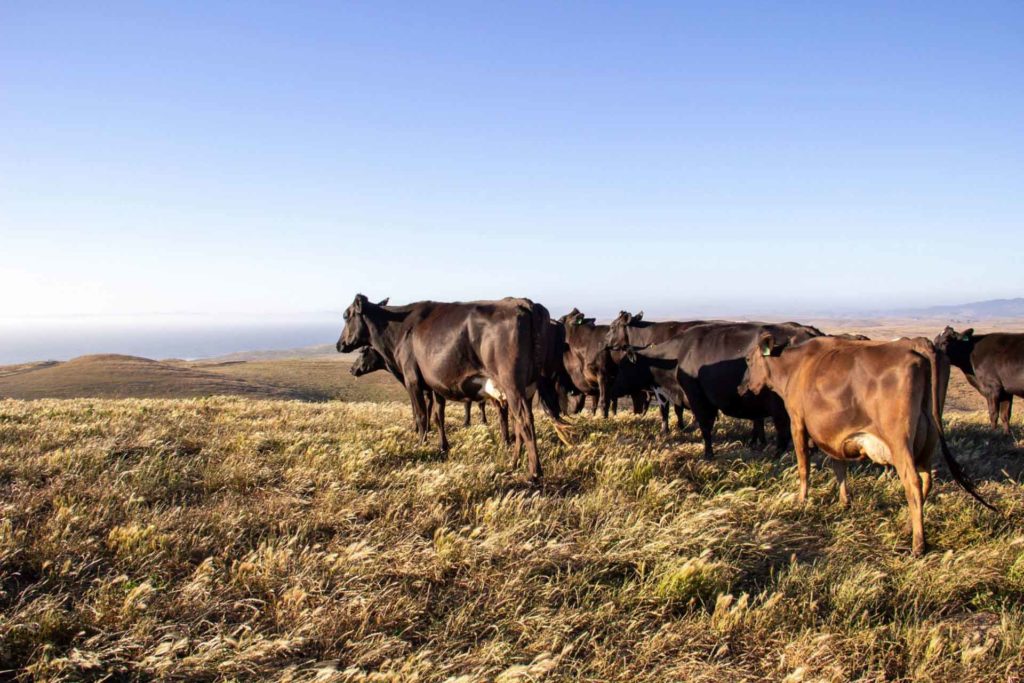
For decades, we have enjoyed a productive agricultural landscape and farming model for the rest of the country, amid wild open space at Point Reyes National Seashore.

As a community and as a culture, we have the responsibility to follow through with the original vision for this place as an example of environmentalists, community members and farmers working together to honor the environment and to protect our local food sources.

The park is in a unique position to demonstrate the value of sustainable agriculture as part of the ecosystem of rangelands and forests at the seashore.

Cattle can be hard on the land (as can elk), but when managed with intention, grazing animals can help repair the soil and revitalize the grasslands. A 2013 scientific study by the Marin Carbon Project showed that managed grasslands can pull carbon from the atmosphere in the same way forests can, and that this is one of the most effective tools we can use to mitigate climate change.
Read Opinion Piece

Related Posts

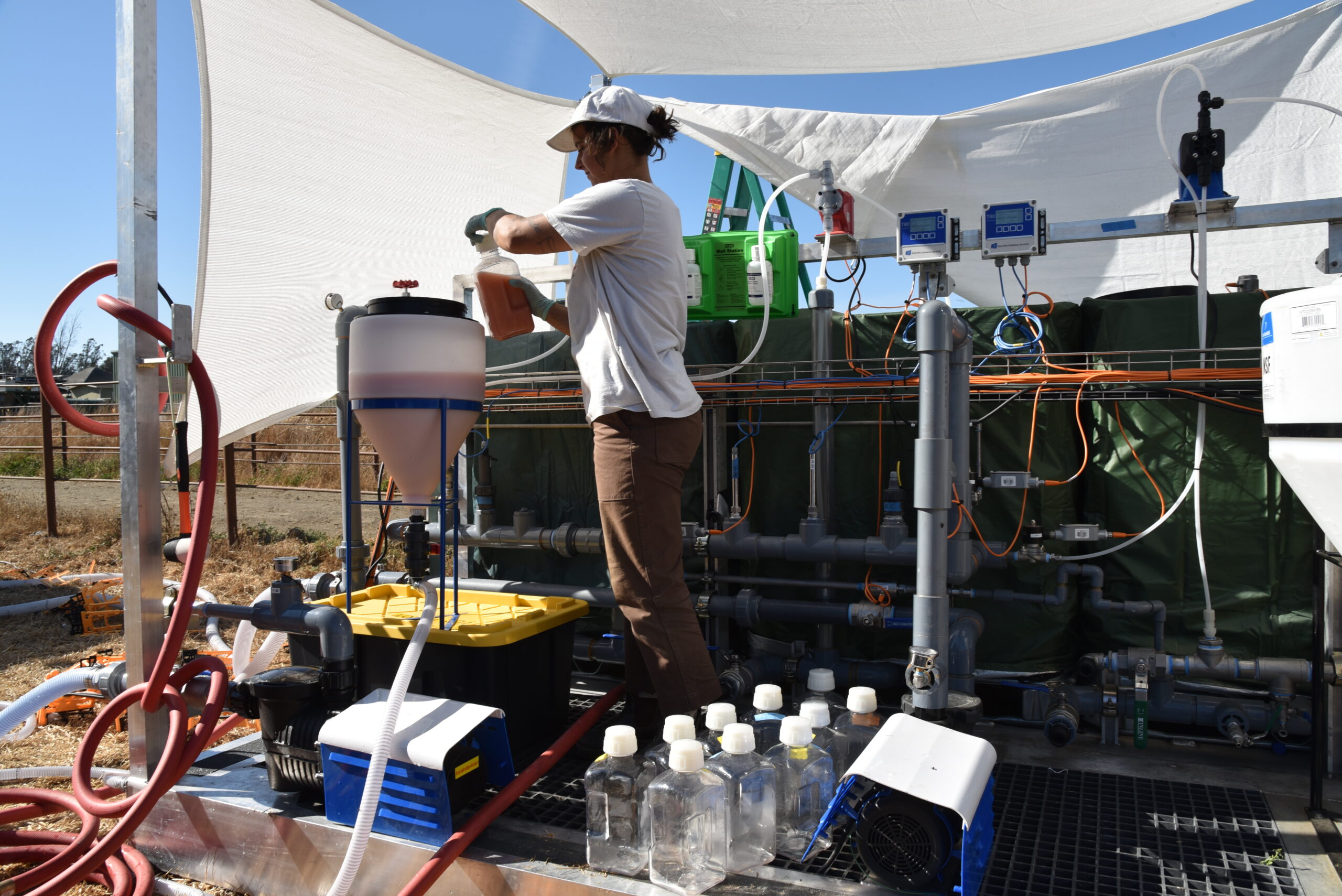
A person wearing a hat, gloves, and work clothes stands at an outdoor research station at Correia Family Dairy, pouring a reddish liquid into a large funnel-shaped container connected to hoses and pipes. Several plastic sample bottles sit on the ground nearby, and shade cloths overhead provide cover. The setup includes pumps, tubing, and monitoring devices, suggesting a water, soil, or nutrient treatment experiment.

These very hungry microbes devour a powerful pollutant

PETALUMA, Calif. — The cows had to be deterred from messing with the
experiment.

Researchers from a Bay Area technology company had come to the sprawling
dairy farm north of San Francisco to test an emerging solution to planetwarming emissions: microscopic pink organisms that eat methane, a potent
greenhouse gas.

Kenny Correia, 35, of Correia Family Dairy, watched the team from Windfall Bio
working near the lagoons used to store manure from the farm’s several hundred
cows. The researchers erected a futuristic system of vats, pipes, tubes and shiny
metal supports. Then, when everything was assembled, they poured pink liquid
into one of the vats. “They were looking like mad scientists out there,” Correia
recounted.

He acknowledged initially thinking it was a “crazy idea” to integrate an outdoor
laboratory into a working farm. There was the potential for the cows to “be all
over it — licking it, pulling out wires and scratching on it,” he said.
But livestock farms are a significant source of methane emissions, and Windfall
wanted to see how much the microbes could help.

Read More »