Organic Insider photo

The Playbook for GMO 2.0 is Going Exactly to Plan, Brands Step in to Combat it

Organic Insider

Photo courtesy of Organic Insider

By Max Goldberg

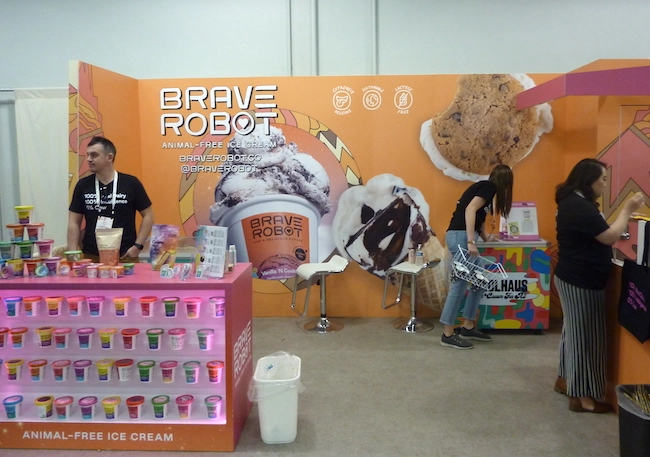
If you are eating “animal-free” dairy or meat products that taste nearly identical to a traditional animal product, you should be asking plenty of questions.

And more often than not, what you will discover is that these foods are anything but “natural.”

Aware of what consumers may find out and not wanting to make the same PR mistake twice, the GMO industry has intentionally introduced sophisticated and deceptive names such as synthetic biology, cultured meat, gene editing, precision fermentation and cellular-based seafood.

Further muddying the waters is that these companies have been funded not just by the likes of Bayer and BASF, but by Silicon Valley heavyweight investors who have bankrolled some of the largest technology companies in the world, giving these start-ups instant credibility and a certain degree of protection from criticism.

Even more, the organic community is being aggressively courted.
Read full article

Related Posts

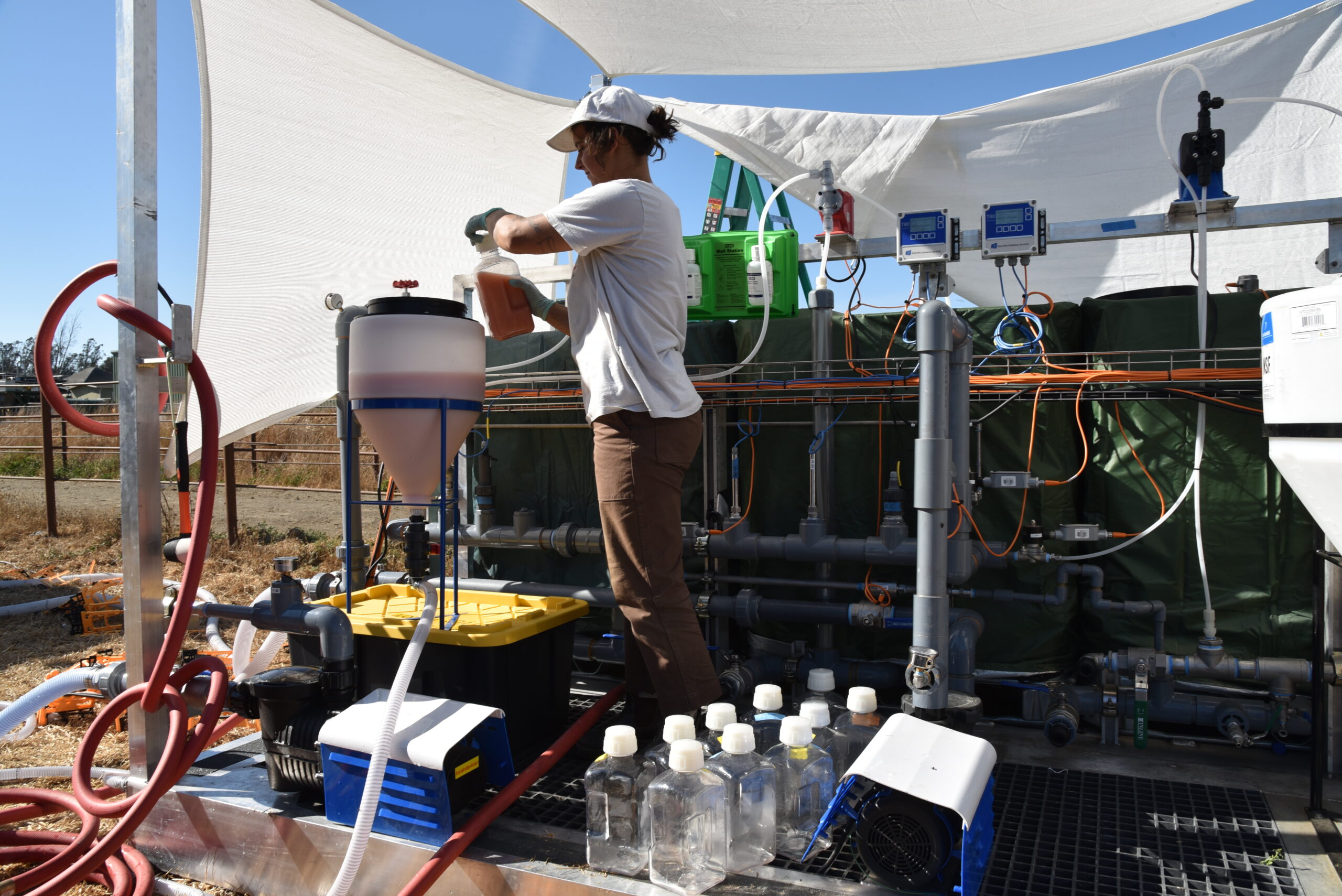
A person wearing a hat, gloves, and work clothes stands at an outdoor research station at Correia Family Dairy, pouring a reddish liquid into a large funnel-shaped container connected to hoses and pipes. Several plastic sample bottles sit on the ground nearby, and shade cloths overhead provide cover. The setup includes pumps, tubing, and monitoring devices, suggesting a water, soil, or nutrient treatment experiment.

These very hungry microbes devour a powerful pollutant

PETALUMA, Calif. — The cows had to be deterred from messing with the
experiment.

Researchers from a Bay Area technology company had come to the sprawling
dairy farm north of San Francisco to test an emerging solution to planetwarming emissions: microscopic pink organisms that eat methane, a potent
greenhouse gas.

Kenny Correia, 35, of Correia Family Dairy, watched the team from Windfall Bio
working near the lagoons used to store manure from the farm’s several hundred
cows. The researchers erected a futuristic system of vats, pipes, tubes and shiny
metal supports. Then, when everything was assembled, they poured pink liquid
into one of the vats. “They were looking like mad scientists out there,” Correia
recounted.

He acknowledged initially thinking it was a “crazy idea” to integrate an outdoor
laboratory into a working farm. There was the potential for the cows to “be all
over it — licking it, pulling out wires and scratching on it,” he said.
But livestock farms are a significant source of methane emissions, and Windfall
wanted to see how much the microbes could help.

Read More »